
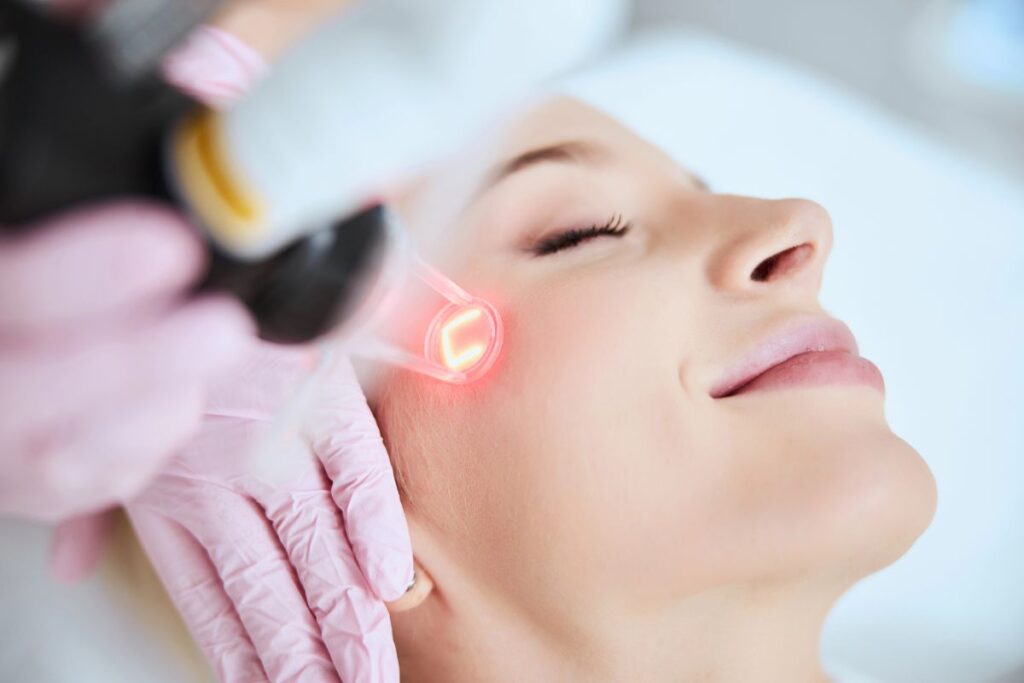
Acne has a way of lingering long after the breakouts are gone. For many people, the active inflammation settles down, but what’s left behind can feel just as frustrating. Texture changes. Small depressions. Discoloration that seems to catch the light at certain angles. These marks often remain for years, and they can affect how someone feels about their skin long after adolescence or early adulthood.
In our Denver practice, we see patients at many different stages of this process. Some are just beginning to notice early scarring. Others have lived with it for a decade or more. The conversation is rarely about perfection. It is usually about improvement, and about understanding what is realistic.
If you’re considering medical treatment to address acne scars, set up an appointment with our experienced team here in Denver.
Why Acne Scars Tend to Last
Acne scars form when inflammation reaches deeper layers of the skin. When the skin heals evenly, collagen rebuilds in a smooth pattern. When healing is disrupted, collagen production can be uneven. In some cases, too little collagen forms and the result is a depression in the skin. In other cases, excess collagen forms and creates a raised area.
Because these changes occur beneath the surface, they are structural. That is why acne scars do not typically fade the way redness or dark spots might. They become part of the skin’s architecture. Some scars soften slightly over time. Many remain unchanged without intervention.
Understanding the Different Types of Acne Scars
Before discussing treatment, it helps to understand what kind of scarring is present. Not all acne scars behave the same way.
Atrophic (Indented) Scars
These are the most common facial acne scars and are caused by collagen loss.
- Rolling scars create soft, wave-like depressions.
- Boxcar scars have more defined edges and a broader base.
- Ice-pick scars are narrow and deeper, extending further into the skin.
Raised Scars
These develop when excess collagen forms during healing. They are less common on the face but can occur.
Raised Scars
This appears as dark marks left behind after acne heals. Technically, these are not scars, and they respond differently to treatment. Accurate assessment is important because each type responds to different approaches.
Treatment Options Patients Often Find Most Helpful
There is no single “best” treatment for acne scars. What works well for one patient may not be appropriate for another. In our experience, these are the treatments that tend to provide meaningful improvement when selected thoughtfully.
Laser Resurfacing
Laser scar revision treatments work by stimulating collagen remodeling and improving surface texture. Over time, the skin gradually becomes smoother as new collagen develops. This option is often helpful for mild to moderate rolling or boxcar scars and for patients who also want improvement in overall skin tone.
Results develop gradually over several weeks as the skin continues to remodel itself.
Microneedling
Microneedling treatments also stimulate collagen production in a controlled way. It is typically well tolerated and may involve minimal downtime.
It tends to be most helpful for mild to moderate texture changes and early scarring. Improvement is usually cumulative and requires a series of treatments.
Subcision
For scars that are tethered or pulled downward by fibrous bands beneath the skin, subcision can help release that tension. This technique is sometimes combined with other treatments to enhance overall results.
Surgical Scar Revision
In select cases, especially when there are isolated deep scars or widened areas, surgical revision may be considered. This approach restructures the scar tissue itself rather than resurfacing the skin.
Dermal Fillers
For certain depressed scars, dermal fillers which use hyaluronic acid can temporarily restore volume beneath the area. This does not remove the scar, but it can soften its appearance. Often, the most effective plans combine treatments in a staged and conservative way.
What About Products for Acne Scars?
- Topical products cannot remove structural acne scars – that is important to understand. However, certain ingredients may support overall skin health and improve surface appearance:
- Prescription retinoids can encourage collagen production over time.
- Vitamin C may improve brightness and tone.
- Gentle exfoliating acids can improve texture.
- Consistent sunscreen use helps prevent discoloration from worsening.
These products are meant to be supportive, and they are not a substitute for procedural treatments when scarring is deeper.
How Long Does It Take to See Improvement?
Acne scar treatment is rarely immediate, given that collagen remodeling takes time. The skin heals gradually. In many cases, improvement unfolds over several months rather than weeks. Patients often notice that small refinements accumulate, and texture that once felt very prominent begins to soften in a more natural way. Setting realistic expectations is important – the goal is progress, not erasure.
Why a Personalized Evaluation Matters
One of the most common mistakes people make is choosing a treatment based on what worked for someone else.
Scar type, skin thickness, pigmentation, prior treatments, and overall facial structure all influence which approach is most appropriate. In our Denver office, we take time to evaluate these variables carefully before recommending a plan. Sometimes that plan is simple. Sometimes it involves layering treatments over time. What matters most is choosing thoughtfully rather than aggressively.
Moving Forward With Acne Scar Treatments
Acne scars can be stubborn, but they are not untreatable. If you are considering options for improving acne scars, a consultation can help clarify what is possible and what approach makes sense for your skin.
If you would like to explore your options, we welcome you to schedule a consultation at our Denver office.